
History
Pavel Šmok’s Artistic Background Ballet Prague Ballett Basel Prague Chamber Ballet Ballet Prague Heritage
Pavel Šmok’s Artistic Background
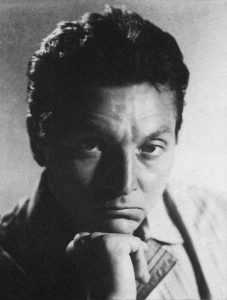 As a choreographer, Pavel Šmok shaped the aesthetics of Czech (and formerly Czechoslovak) dance, enriching it with his peculiar inventiveness, musicality and humour. Moreover, he was a skilled performer and cinematographer. He is the founder of Ballet Prague and Prague Chamber Ballet. The latter carries on his legacy, striving to further develop and inspire the Czech dance scene and thus stand true to the reputation of Pavel Šmok’s successors.
Pavel Šmok was born in Levoča, Slovakia. At the age of 13, he and his parents moved to Prague. After completing a technical college, he continued his studies at the Faculty of Mechanical Engineering of the Czech Technical University, where he stayed for two years. He later applied the technological knowledge thus earned in his artistic work. Already as a student, he was engaged in amateur theatre and was a member of the Josef Vycpálek Song and Dance Ensemble. In 1948 Šmok entered the acting department of the conservatory, having thus the chance to receive education from master actors such as Radovan Lukavský, Karel Höger, Jiří Plachý Sr., Bohumil Bezouška, etc. Though he moved to the dance department after one year, he maintained his contacts with the world of drama. E. F. Burian offered him a guest appearance at the D 47 theatre, and he also got a minor part in a film, yet he decided to fully concentrate on dancing.
Šmok started attending the dance department of the conservatory at the age of 22. Despite his uncommonly advanced age, he had all the necessary prerequisites for the studies thanks to his sport background; he learned the basics of classical dance through figure skating, where his coaches were Helena Štěpánková and Marta Aubrechtová (he skated competitively and later performed in Ice Shows, for which he also prepared choreographies). His teachers at the conservatory were Marie Anna Tymichová for classical dance, Z. Šemberová for folk dance, and Laurette Hrdinová for contemporary dance. Pavel Šmok graduated in 1953.
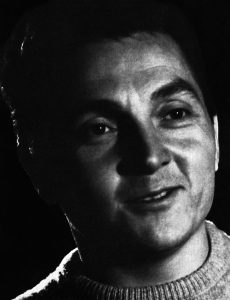 During their final year, the students accepted an engagement at the Army Opera, part of the Vít Nejedlý Army Art Ensemble, where Luboš Ogoun headed the dance section. The Army Opera was a touring theatre performing throughout Czechoslovakia, but it was disbanded in 1955. Pavel Šmok was offered a place at the National Theatre in Prague, but he almost immediately left it for the J. K. Tyl theatre in Pilsen. There he was given the opportunity to perform several solo parts (e.g. Father in Jánošík; Prince Goldilocks in the ballet From Fairy Tale to Fairy Tale; the Jester in Swan Lake; Vaslav in The Fountain of Bakhchisaray; Peter in the successful production Youth, and also a dancing part in Red Poppy choreographed by Luboš Ogoun). Šmok portrayed roles in classical, character, as well as contemporary pieces.
For the Pilsen theatre, Šmok also created his first choreographies (dances for the operettas Vintage, Paganini, and Beautiful Helen, and the opera A Masqued Ball). In 1958 he succeeded in the selection procedure for the director of the ballet section and choreographer at the theatre in Ústí nad Labem. He debuted with the productions Waltzes to music by A. Dvořák, Wedding Shirts by J. Novák and Carnival by R. Schumann. The ballet Seven beauties to the music of K. Karaev was followed by a successful Czech ballet The Servant of Two Masters, prepared by Jarmil Burghauser to a libretto written by Jan Reimoser (under the pseudonym Jan Rey). With the latter piece, Šmok attended the 1960 Festival of Contemporary Ballet in Brno, where he was inspired by the discussions about the developments and directions in the field of dance. He applied this experience in a full-length ballet The New Odyssey, where he abandoned the classical ballet morphology and retelling of a story through dance and opted for metaphorical expression instead. The show premiered to acclaim at the Ústí theatre. Afterwards, Šmok accepted a position as choreographer at the Ostrava Ballet.
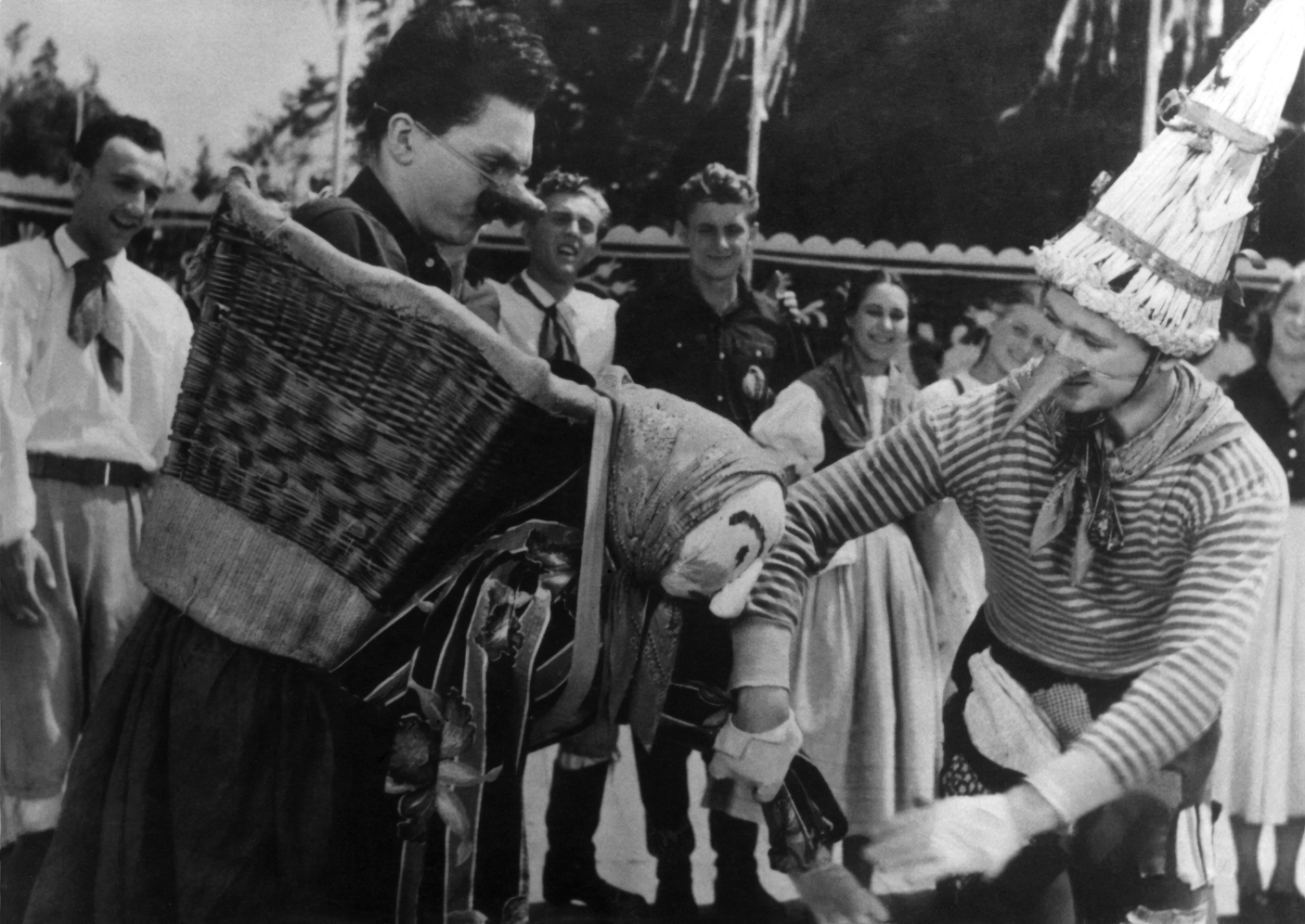
Pavel Šmok s Vycpálkovci v kostýmu maškary
Pavel Šmok with the Vycpálek ensemble in a masquerade costume
Pavel Šmok elaborated on his artistic style employed in the New Odyssey. He came to the theatre as a refreshing element and enriched the repertoire with pieces for young audience. The productions he staged included Viktorka by Z. Vostřák; L. Janáček’s Lachian Dances; M. de Falla’s El Amor Brujo (Love By Witchcraft); J. Ducháň’s Pygmalion; Rossiniana. Love Song by P. Eben; Vertigo by Č Gregor, or V. Bukovský Conscience (which became famous later in Ogun’s version titled Hiroshima). He also created choreographies for operas and dramas, made guest appearances in in other theatres and also worked for on television. As a guest choreographer, he co-operated with the Brno ballet ensemble, back-then led by Luboš Ogoun, a pioneer of modern approach to ballet staging. Šmok created a choreography for The Seven Deadly Sins to Bertold Brecht’s libretto and Kurt Weill’s music and achieved a real success with Gershwin’s Rhapsody in Blue.
During that period, Pavel Šmok fell for the magic of television. He started co-operating with the Ostrava TV studio in 1962 (with Karel Kupka’s symphonic suite Picassiade). He was a true a pioneer of the new artistic genre: instead of merely recording his choreographic works, he looked at it through a filmmaker’s lenses in terms of the cinematography and dynamic editing. Šmok worked regularly for the Czechoslovak TV as well as for foreign broadcasters and also prepared a number of entertainment programmes and revues in collaboration with the Czechoslovak TV Ballet, as well as TV films.
Ballet Prague
While Pavel Šmok and Luboš Ogoun developed their distinctive choreographic styles in different theatres, their paths crossed in Brno thanks to Šmok’s guest appearances. The two artists thus got to know each other better and discovered that their creative goals were in fact quite similar. Being the most progressive creators striving to revive the contemporary ballet, they decided to form their own ensemble, with the help of dramaturg Vladimír Vašut. Miloš Hercík, the director of the National Theatre Studio, supported them in their efforts. Luboš Ogoun was invited to establish the ensemble, and Pavel Šmok joined him as the choreographer. The ensemble was created under the name Studio Ballet Prague, which later changed to Ballet Prague. During the seven years of its existence, the ensemble premiered 22 choreographies, of which L. Ogoun created ten, P. Šmok eleven , and only one piece was a collaborative work (Fever to the music composed by Karel Mareš). Rather then being co-creators, they complemented each other in dramaturgy. Ballet Prague had no permanent stage and thus mostly performed on foreign tours and in long-term engagements.
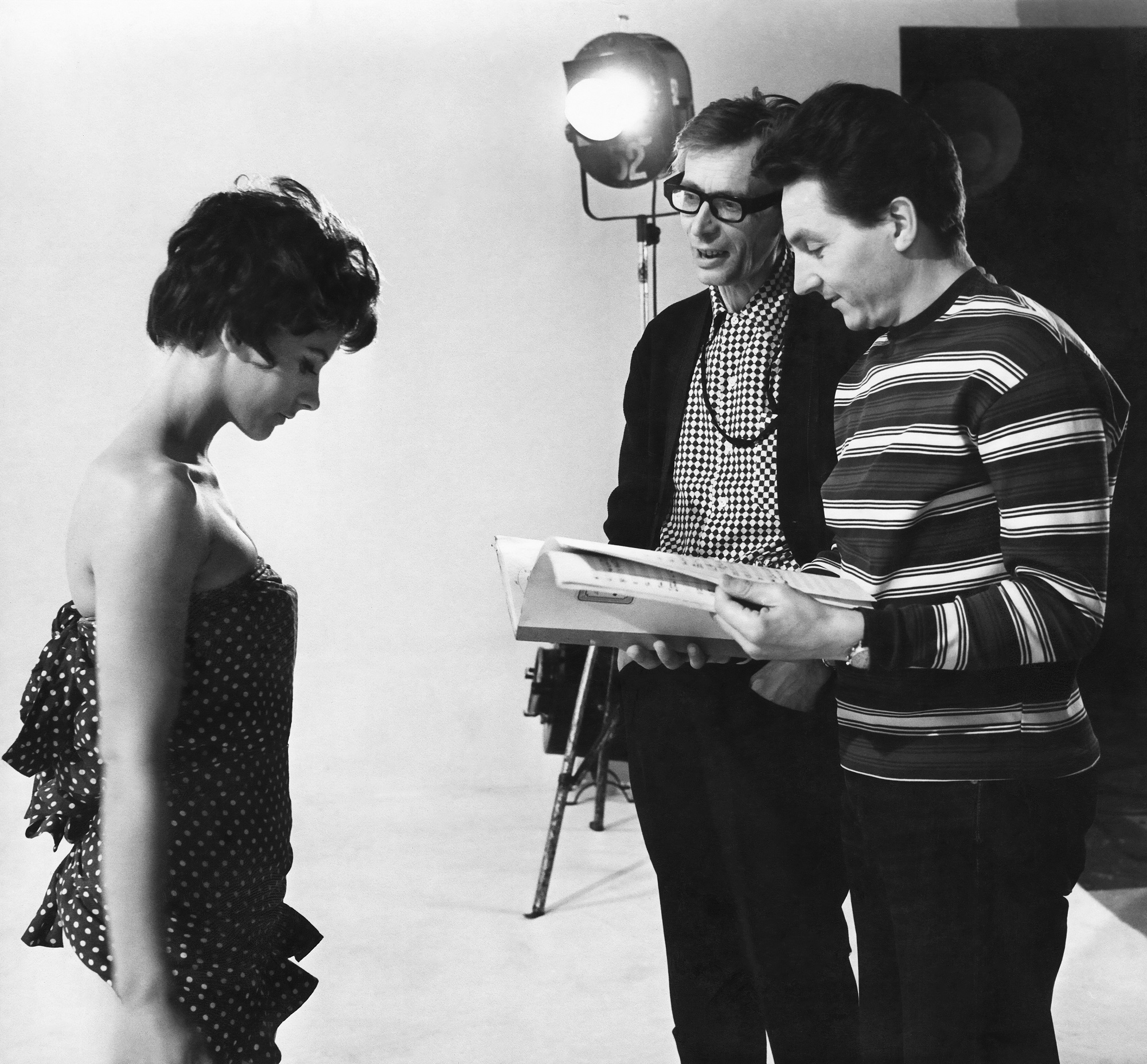
Nerves (Marcela Martiníková and Pavel Šmok), photo CS Press ServiceČSTK
Šmok’s successful choreographies from this era include in particular the re-staged Rossiniana; a ballet about adolescence titled Reflections, prepared to music by their contemporary Zdeněk Zouhar; Karel Kraugartner’s Jazz Suite; Frescoes by Bohuslav Martinů, the comic Nedbalky (Negligee) to music by Oskar Nedbal; J. S. Bach’s Largo & Fugue in A minor in Karel Velebný’s arrangement; the Gangrene, a piece with heavy social topic set to music by Charlie Mingus, and especially the Intimate Letters from 1968, where Šmok innovatively took on Leoš Janáček’s String Quartet No 2.
Ballett Basel
In 1968 Luboš Ogoun accepted the position of director of the NT Brno ballet ensemble, with the understanding that he would continue his collaboration with Pavel Šmok as choreographer of Ballet Prague. The political situation after the Soviet occupation that year ultimately threatened the existence of the independent ensemble. Pavel Šmok thus agreed with director Hercík that the dancers could move with him to Basel, where he had been offered the position of director of the local ballet ensemble. After their arrival, the ensemble was thus composed of Swiss and Czech dancers.
In Basel, Šmok strived for a balanced repertoire. He staged Don Juan to the music by Jarmil Burghauser; re-staged Frescoes and Intimate Letters; created the tragicomic ballet Brainticket on the motifs of the Swan Lake and his original version of Scheherazade, the contemporary Tenebrae (music Klaus Huber). Subsequently, still in Basel, Pavel Šmok prepared a highly successful choreography The Drunken Boat (Le Bateau ivre), featuring an actress who was reciting the Arthur Rimbaud’s poem on stage, and prepared the first version of one of his most famous choreographies, Leoš Janáček’s Sinfonietta. He also collaborated as a guest with the Brno theatre (Glagolitic Mass at the Janáček Theatre) and with the theatres in Nuremberg, Bern, Darmstadt, and Tessin.
In 1973 Pavel Šmok returned to Czechoslovakia, despite having been offered a renewal of his contract in Basel as well as places at several other theatres. However, the art agency Pragokoncert could not extend his artist’s status in a foreign engagement, which meant that if he stayed, he would have become an emigrant. No promising opportunities awaited him back home, though. Only Boris Slovák from the Slovak National Theatre invited him for collaboration. Šmok was to stage the Intimate Letters and create his own version of Stravinsky’s popular ballet The Firebird. The innovative production premiered to acclaim but was soon removed from the repertoire as the communists declared it ideologically flawed. Pavel Šmok was not banned but the ballet directors were afraid of engaging him. Now and then, he would work for TV, operas, operettas, and drama. In 1975 in Darmstadt, his production Intimate Letters was staged and a Czech team with Pavel Šmok as choreographer also prepared The Beggar’s Opera by Brecht there. He also collaborated with Laterna magika, where he participated in the preparation of the Prague Carnival (1974), and later created the successful ballet Snow Queen (1979).
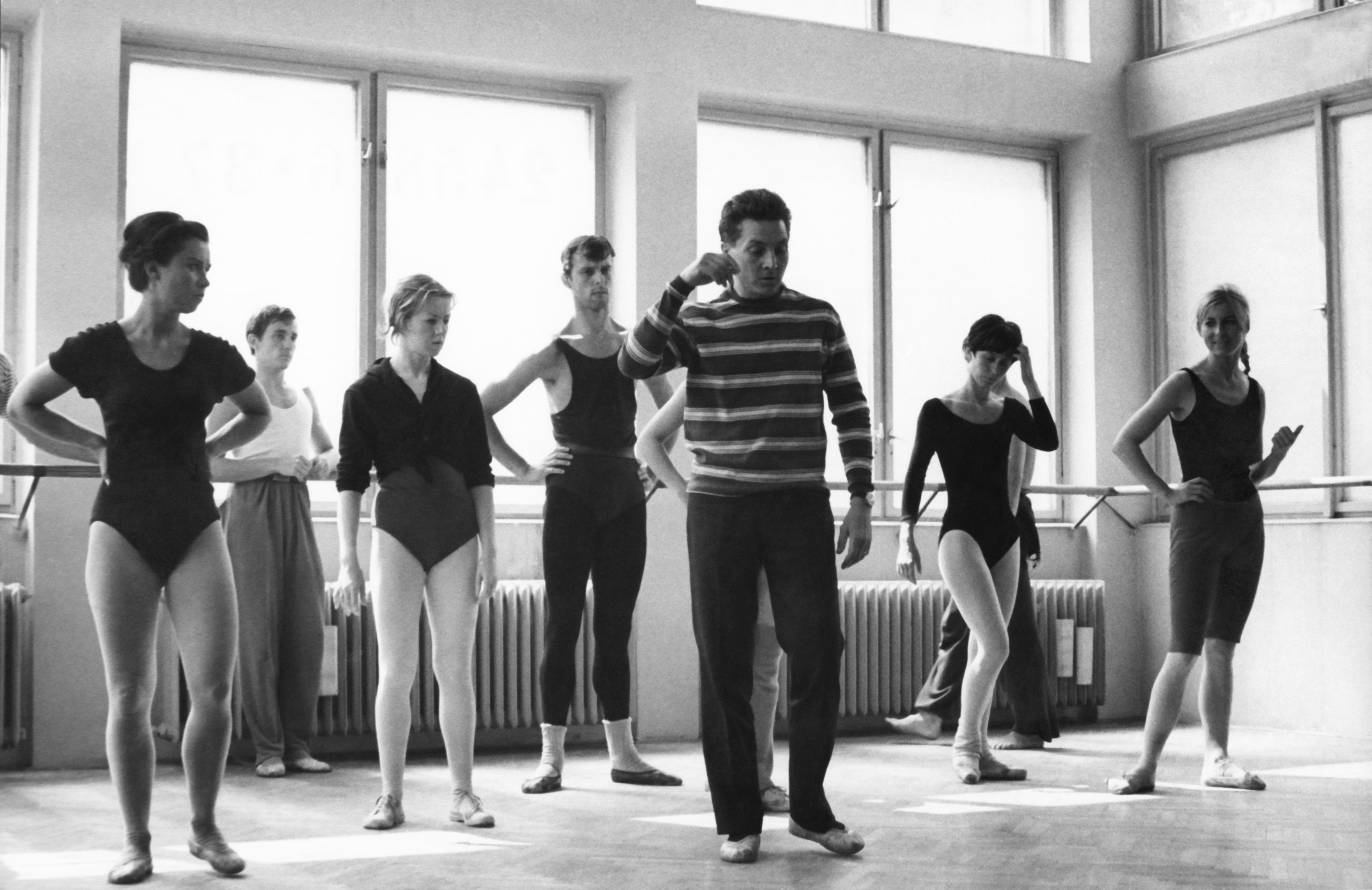
Pavel Šmok with the dancers
Prague Chamber Ballet
Three years later, Miloš Hercík approached him again, this time as the director of the Rokoko theatre. Under his patronage, Pavel Šmok could once again accomplish his dream for a new independent ensemble. Their first production was called How to Make a Ballet (1975). Kateřina Franková, Jan Klár, Vladimír Kloubek, and Zuzana Innemanová (guest member of the Slovak National Theatre ensemble) were the co-founding members of the new ensemble. At that time, Rokoko was part of the Prague City Theatres. The Prague Chamber Ballet (called Prague City Theatres Ballet back then), staged three compound productions there. In 1980, the ensemble separated from the City Theatres and assumed the name Prague Chamber Ballet. Jiří Opěla became their manager and the Central Bohemian Regional Cultural Centre served as their agency. The ensemble performed regularly home and abroad. It worked under the auspices of the Czech Music Fund, Pragokoncert, and the Czech Art Studio, in the given order. After 1989, the ensemble was attached to the Theatre Institute and in 1995 Pavel Šmok and Jiří Opěla founded their own limited company.
During that period Šmok’s most striking choreographies were conceived, such as Pia Fraus; the humorous and timeless Stand-in; The American Quartet to the music by Antonín Dvořák, and The Kreutzer Sonata. His choreography From My Life ( 1983) was set to the music of Bedřich Smetana; the production Musica Slovaca (to music composed by Ilja Zelenka) from the same year was inspired by folk songs; in 1986 came Verklärte Nacht (Transfigured Night) to August Schoenberg’s music, followed by Smetana’s Piano Trio in G minor (1991) and Dvořák’s The Wild Dove (1992), Waltzes (1990), and Stabat Mater (1995). The professional reviewers generally acclaimed Šmok’s pieces. The theoreticians admired his musicality, the blending of music with the dancers’ bodies, his distinctive style and sophisticated direction establishing delicate links among the dancers, and the hard-to-define “Czech feeling” of his choreographies, which he infused with the spirit of simplicity, humility, and human warmth while avoiding exaggerated references to vernacular art.
At the end of the 1990s Pavel Šmok was replaced by Libor Vaculík as the ensembles’ artistic director for a couple of years; in 2002 Šmok briefly became the director of the Prague State Opera Ballet, to which the Prague Chamber Baller was incorporated in 2003. Pavel Šmok retired in 2003 and since then, he would spend most time at his cottage in Nekoř. In 1990-2005 he taught choreography at the Music and Dance Faculty of the Academy of Performing Arts (HAMU) in Prague.
In 1998 Šmok created one of his last choreographies, On the Overgrown Path, to music by Leoš Janáček, which has become a staple. As late as in 2001, the Prague Chamber Baller premiered the ballet Golem at the State Opera Prague. Pavel Šmok choreographed several operas, and the State Opera Prague also included The Stand-in, From my Life and the show How to Make a Ballet on its repertoire. In 2007, the dancers from the original Prague Chamber Ballet left the ensemble to pursue their independent careers. Pavel Šmok, due to his age, stayed only as a mentor and artistic support for the younger generation.
Pavel Šmok received two Czech Literary Fund Awards, the Medal of Merit from President Václav Havel in 2002, the Special College Award at the 2005 Thalia Awards, and the Lifetime Achievement Award from the Ministry of Culture in 2012 for his artistic merits in development of Czech dance and theatre and worldwide promotion of Czech art, music, and dance. He died on 4 April 2016 at the age of nearly 89 years.
Ballet Prague Heritage
Texts concerning the history of the ensembles and a collection of digitised documents are available at the Ballet Prague Heritage website.