
Press Release: Pavel Šmok Study and Research Center in Braník to open in May
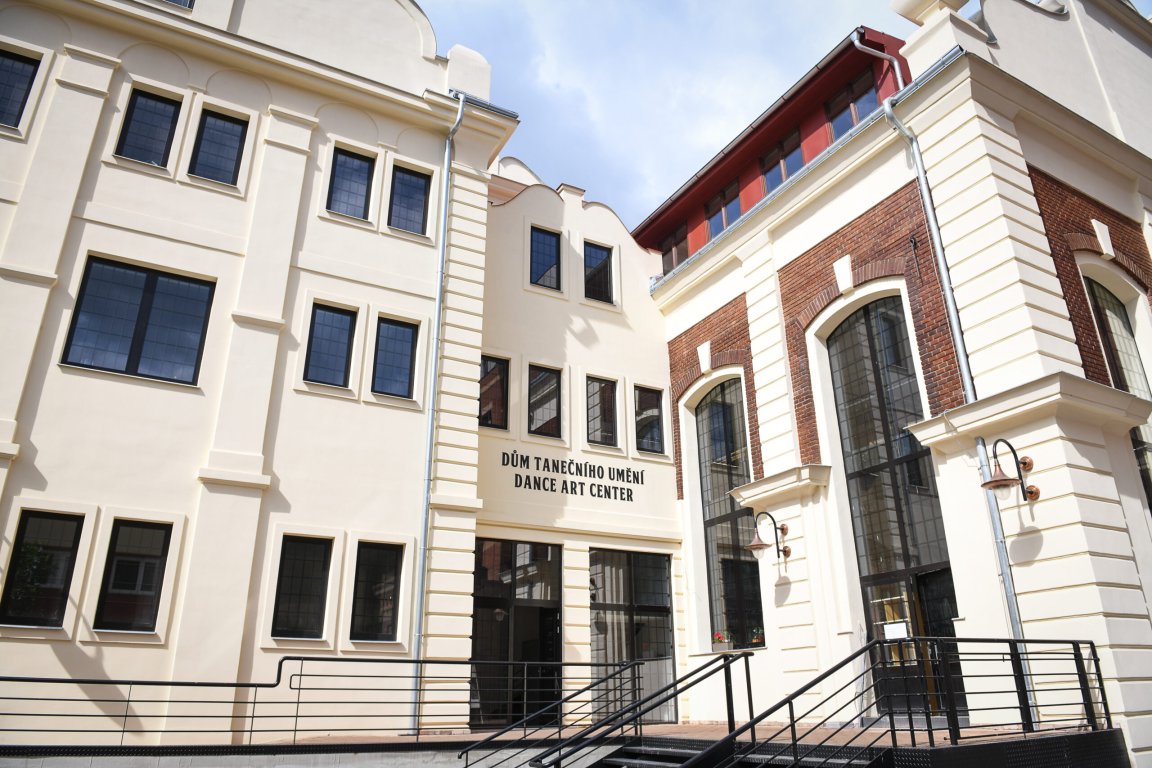
The Pavel Šmok Study and Research Center is being established in the House of Dance Arts in Braník. The newly established Pavel Šmok Institute and Endowment Fund has set itself ambitious goals: its activities will include creating an archive and online database of works by the Prague Ballet and Prague Chamber Ballet, as well as historiographical research, its own publishing activities, and accompanying programs for the public. The first two discussions in the series “Wandering Through Dance History” will take place in May and June.
“At the Pavel Šmok Institute, we are working intensively to build a video library, study room, and research room with an extensive video collection of choreographies from the era of Studio Balet Praha and, above all, the Prague Chamber Ballet,” says Ladislava Dunovská Jandová, director of the Pavel Šmok Institute. “We want to regularly organize educational cycles for young people, adults, and seniors, as well as online lectures for educational institutions such as dance conservatories, and to present and promote the artistic legacy of Studio Balet Praha, the Prague Chamber Ballet, and its founders—Pavel Šmok, Luboš Ogoun, and Vladimír Vašut.”
The first in a new series of lectures, discussions, and screenings, Wandering Through Dance History, will take place at the Dance Art Centre on Thursday, May 5, at 3 p.m. The guest of the discession entitled “Balet Praha – Dance of Small Forms” will be Ivan Krob, dancer, teacher, and former member of the late Ballet Prague company.
The guest of the second discussion will be dancer and choreographer Petr Zuska. The event entitled “Pavel Šmok Inspiring” will take place on Thursday, June 2, at 3 p.m.
The Institute’s main activity focuses on promoting and reviving the legacy of Pavel Šmok, a prominent figure in Czech choreography who had a fundamental influence on the development of dance art in the second half of the 20th century, in the form of public screenings and lectures. “It is important to show the development of dance and ballet in a broader context, to understand the spirit of the times and the roots from which ballet and modern (and contemporary) dance grew in our environment, what influences affected creators such as Luboš Ogoun and Pavel Šmok, who represent a kind of first generation of innovators,” explains Lucie Kocourková, dance historian and publicist, coordinator of activities at the Pavel Šmok Institute. “Where could they have encountered these influences and what was it possible to achieve in the conditions of the time? I offer my interpretation of developments in, for example, the publication (Studio) Balet Praha – Nová vlna československé choreografie (Prague Ballet Studio – The New Wave of Czechoslovak Choreography). However, as personal experience is always the most impressive, we are also preparing meetings and interviews with guests and eyewitnesses as part of the Institute’s activities.”
As part of the new premises of the Pavel Šmok Institute, a video library and study room will soon be opened, where it will be possible to access some fully digitized materials for the study of choreographies by Pavel Šmok, Luboš Ogoun, and other personalities for current and future performers and creators (dancers, choreographers, conservatory or art college students).
A separate part will be a database of selected materials, which will also be launched in May on the website www.balletprague-heritage.cz. “The most interesting materials, whether photographs, articles, reviews, or, from a later period, video clips, will be available in preview quality on the Ballet Prague Heritage website, which will serve as a public database and presentation of the repertoire of both ensembles and the artists who performed in them,” adds Lucie Kocourková. “The database will gradually grow; it is a long-term part of the project. After its launch, visitors will find documentation on most of the repertoire of Ballet Prague (1964–1969). We will gradually process the choreographies created during Pavel Šmok’s time in Basel and the repertoire of the Prague Chamber Ballet.”
This year, the Institute plans to publish a monograph entitled “Pavel Šmok: Choreographer with the Soul of a Poet” as part of the series Studio Balet Praha a Pražský komorní balet – historie a osobnosti (Prague Ballet Studio and Prague Chamber Ballet – History and Personalities).
—
Media contact:
Mgr. Johana Mravcová
tel: +420 605 751 290
e-mail: mravcova@balet-praha.cz