
Press Release: A Busy Season for the Pavel Šmok Institute: Video Library, Online Database, Ballet Prague Heritage, Lectures, and Preparation of a New Publication.
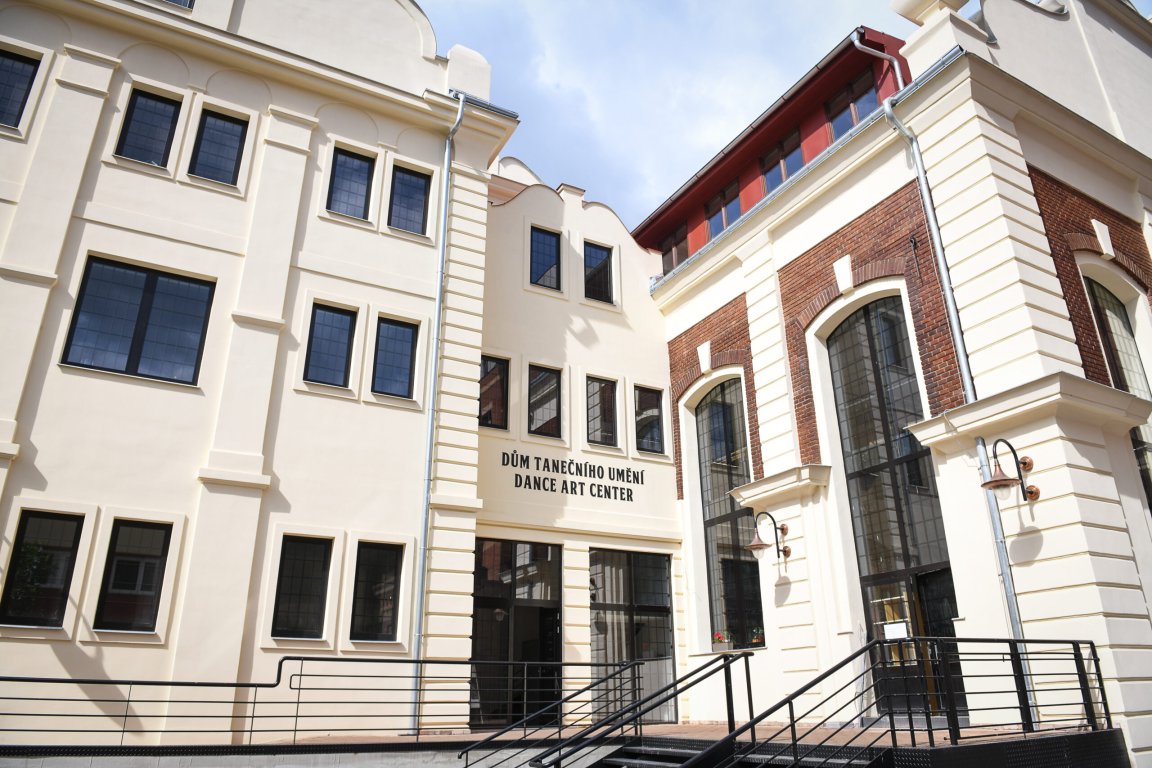
At the Pavel Šmok Institute in the Dance Art Centre in Braník, the video library with a study room will be open again in the new 2023/24 season, where you can access some fully digitized materials for studying the choreography of Pavel Šmok, Luboš Ogoun, and other personalities. The premises offer a reference study room with an archive of printed materials, photographs, and a video collection of choreographies, primarily from the period of the Prague Chamber Ballet.
A modern database, Ballet Prague Heritage, is available online. Here, interested parties will gradually find documentation and digitized artistic works from both ensembles, which significantly influenced the Czech and Czechoslovak dance and ballet scene in the second half of the 20th century. They can find profiles of works, creators, and performers, as well as a brief history of both ensembles and their most prominent figures. For example, materials from the period of the Ballet Prague ensemble have been compiled, to which unique archival materials from Pavel Šmok’s time in Basel are now being added, but you will also find materials showing Pavel Šmok’s early artistic life.
The Pavel Šmok Institute continues to organize public educational lectures with eyewitnesses and members of Ballet Prague and the Prague Chamber Ballet this fall. On Tuesday, October 10, 2023, at 5 p.m., a discussion with Linda Svidró and Igor Vejsada on the topic of “Discover the World of Ballet with Us” will take place in the small hall of the Prague Municipal Library. (Link to the event online here.) Other discussions, which will take place at the House of Dance Art, are intended for students of the Prague Dance Center Conservatory.
“I would like to conceive the discussions we have the opportunity to hold at the Municipal Library as lively meetings with artists who can share with ballet lovers their love for a profession that is one of the most demanding,” says historian and publicist Lucie Kocourková, who hosts these events. “The second important line of work is publishing and digitization, which goes hand in hand with the physical processing of the collection. This is not only the legacy of a great choreographer, but of an entire historical era. The living future of art depends on whether we understand our roots well, whether we know what shaped us, what stages the Czech ballet and dance scene went through. It is necessary to build a solid foundation of knowledge and experience that can be passed down from generation to generation, which is why it is also necessary to focus on the preservation and interpretation of history,” she explains the Institute’s activities.
“As an independent theorist, I dare say that we are repaying at least part of the debt that our historiography owes to the art of dance. I would like more of us to build on the work of Professor Božena Brodská, for example, and offer not only artists a comprehensible view of the history of ballet after 1945. It is natural that we each have our own specialization; in addition to multimedia theater, which has been my specialisation for years, I am currently focusing on the legacy of Pavel Šmok and his ensembles. The collaboration with Kateřina Dedková Franková, who is working with me on the creation of the IPŠ archive, is invaluable to me,” she adds to her vision.
The director and founder of the Pavel Šmok Institute and Endowment Fund is Mgr. Ladislava Dunovská Jandová, who is the author of the entire concept. “For the second year running, the Pavel Šmok Institute is offering both in-person and online opportunities for specialized study of historical materials related to the artistic activities of Studio Balet Praha and the Prague Chamber Ballet, as well as personalities such as Luboš Ogoun, Pavel Šmok, and Vladimír Vašut,” says Dunovská Jandová. “In addition to educational lectures and discussions, we are continuing our extensive publishing activities, and next year we will publish a monograph on another important figure, Luboš Ogoun, on the occasion of the 100th anniversary of his birth (1924-2009). The year 2024 will also bring another important anniversary, as it will mark sixty years since the founding of Studio Balet Praha.
On this occasion, the Institute will prepare a mobile exhibition in Czech and English. The exhibition will accompany the Prague Chamber Ballet on tours throughout the Czech Republic and abroad, but it will also be on display at the Vinohrady Theatre in Prague and the Dance Art Centre in Braník.
—
Media contact:
Mgr. Johana Mravcová
tel: +420 605 751 290
e-mail: mravcova@balet-praha.cz